
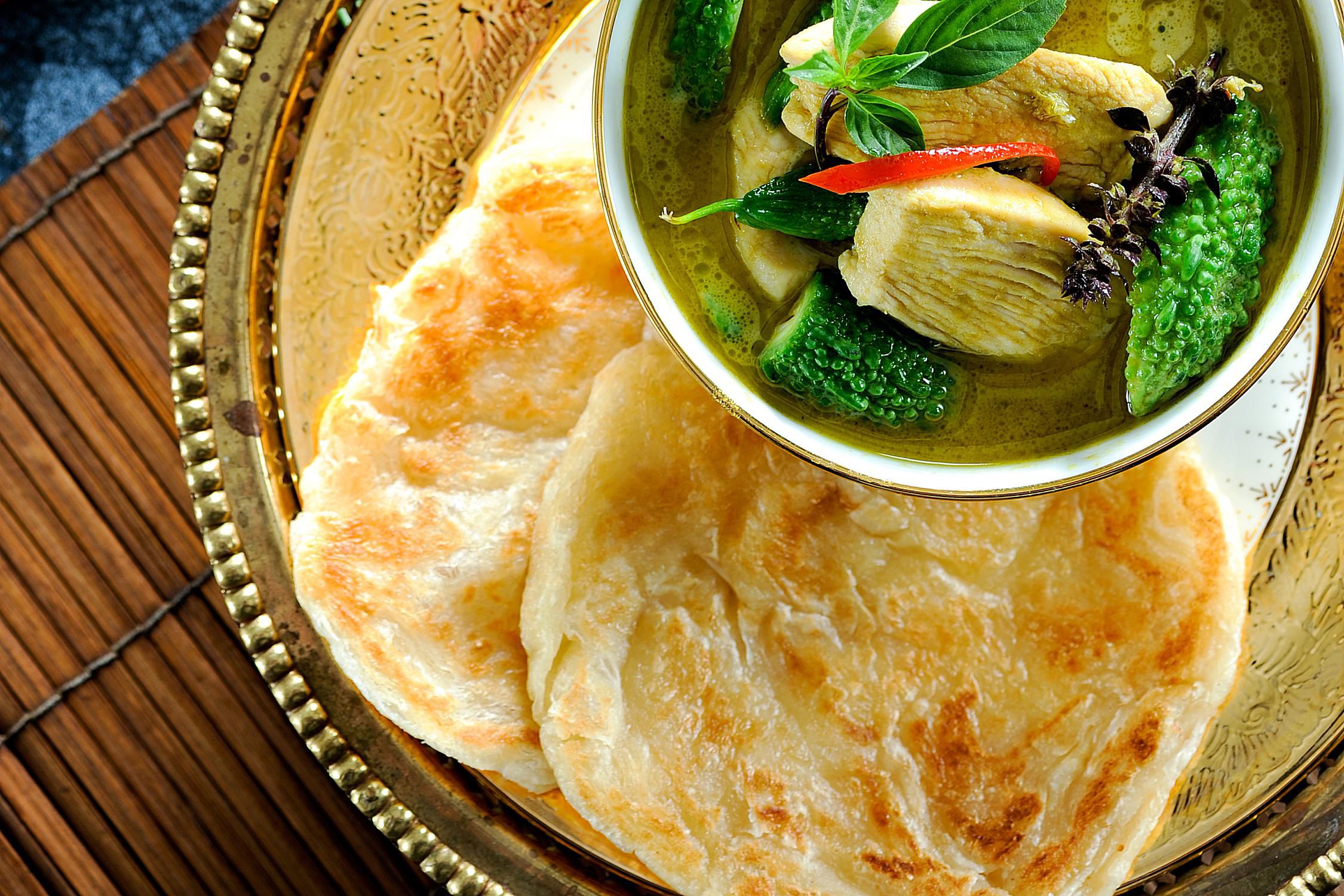
Roti refers to an unleavened flatbread eaten in India, other South Asian countries, and in some parts of the Caribbean and Africa. There are many varieties but, for purposes of differentiating the terms “roti” and “roti canai”, we focus on the North Indian paratha roti (parotta in South India and Sri Lanka). To make paratha, bread dough is coated in ghee (clarified butter), rolled very thin, sprinkled with more ghee, folded like a paper fan, rolled into a coil, rolled thinly then cooked in an oiled griddle called tawa. Like we make faratas in Mauritius.
Indian migrants brought their cuisine with them and influenced the cuisines of their adopted countries. In Indonesia, paratha roti came to be known as roti cane. In Malaysia, it became roti canai. In Singapore, it is called roti prata.
